


How to Tell if Sterling Silver is Real

Have you ever found a beautiful piece of silver jewellery at an antique shop or inherited a family heirloom and wondered if it’s genuine sterling silver?
Whether you’re buying a necklace, bracelet, ring or collectable, knowing how to identify real sterling silver can help you buy with confidence and avoid costly mistakes.
The good news? You don’t need expensive equipment to spot many genuine silver items. Here are some simple checks you can do at home.
🔍 Check for Hallmarks
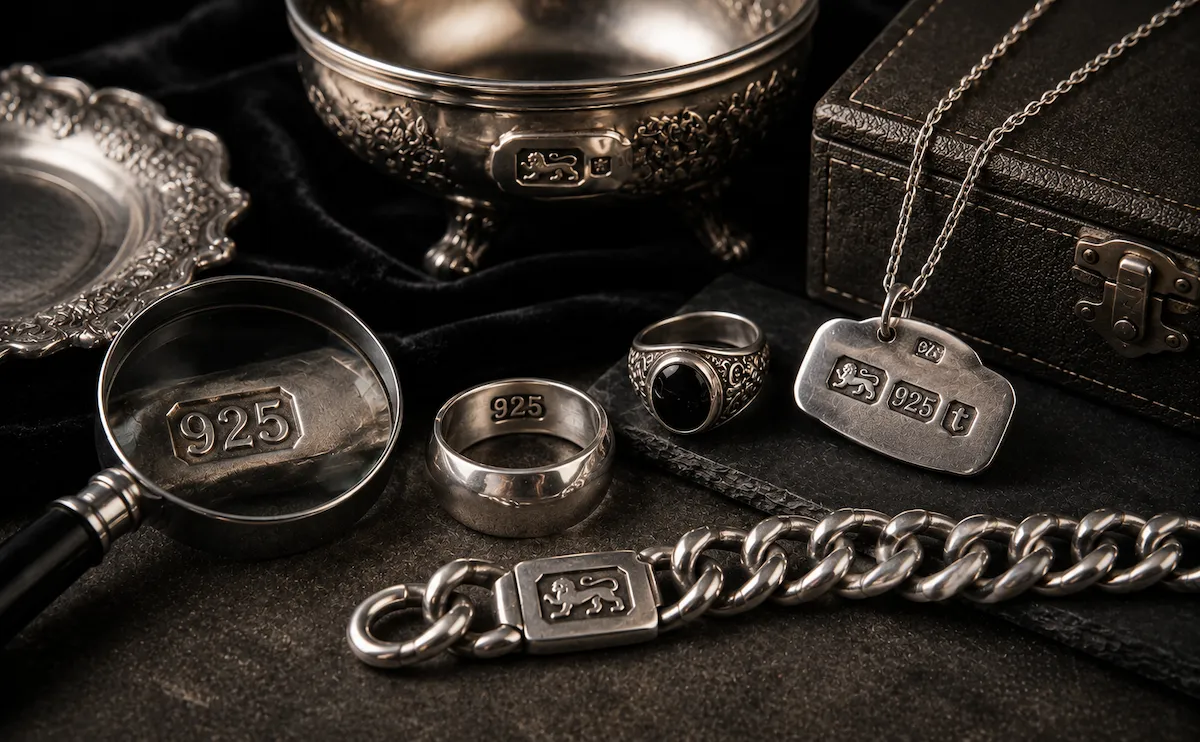
The easiest way to identify sterling silver is by looking for a hallmark.
Common sterling silver hallmarks include:
- 925
- S925
- Sterling
- Sterling Silver
- STG
On British silver you may also find:
- A lion passant (walking lion)
- An assay office mark
- A date letter
- A maker’s mark
Hallmarks are usually found inside rings, on bracelet clasps, necklace tags, pendants or on the underside of decorative silver items.
Tip: A jeweller’s loupe or magnifying glass can make tiny hallmarks much easier to read.
🧲 Try the Magnet Test
Silver is not magnetic.
If a strong magnet firmly attracts the item, it’s probably made from steel or another base metal.
Keep in mind that this test isn’t foolproof. Some fake silver items are also non-magnetic, so use this as one clue rather than proof.
✨ Look for Natural Tarnish
Many people think tarnish means silver is fake.
In reality, genuine sterling silver naturally tarnishes over time as it reacts with sulphur in the air.
A quality silver polishing cloth will usually restore its shine.
⚖️ Feel the Weight
Silver is a dense metal.
A genuine sterling silver item will often feel heavier than it looks. If a large item feels unusually light, it may be made from aluminium or another lightweight metal.
🔎 Check for Peeling
Silver-plated items can develop:
- Peeling
- Bubbling
- Flaking
- Brass or copper showing underneath
Solid sterling silver won’t peel because it is silver all the way through.
❄️ Try the Ice Cube Test
Silver is one of the best conductors of heat.
Place an ice cube on the item.
If it melts noticeably faster than on other metals, it could be genuine silver.
🧪 Consider Professional Testing
If you’re unsure or the item is particularly valuable, a jeweller can confirm its authenticity using specialist equipment such as electronic testers, XRF analysis or acid testing.
Professional testing is worthwhile for antique jewellery and high-value collectables.
❓Frequently Asked Questions
Is 925 always real silver?
Usually, yes. A 925 hallmark indicates sterling silver, although counterfeit hallmarks do exist. Buying from reputable sellers is always recommended.
Can sterling silver rust?
No. Sterling silver tarnishes naturally but does not rust like iron or steel.
Does sterling silver turn your skin green?
Quality sterling silver normally shouldn’t. Green marks are often caused by the copper alloy reacting with moisture, skin chemistry or cosmetics and don’t necessarily mean the silver is fake.
Is tarnished silver worth less?
Not usually. Tarnish is a natural process and can usually be removed without affecting the item’s value.
💛 Final Thoughts
Learning how to identify genuine sterling silver is a valuable skill for any collector.
By checking hallmarks, testing for magnetism, looking for natural tarnish and buying from trusted sellers, you’ll be much better equipped to recognise authentic sterling silver and avoid imitations.
Whether you’re starting your collection or adding another treasured piece, a little knowledge goes a long way.
